What is a POS-display?
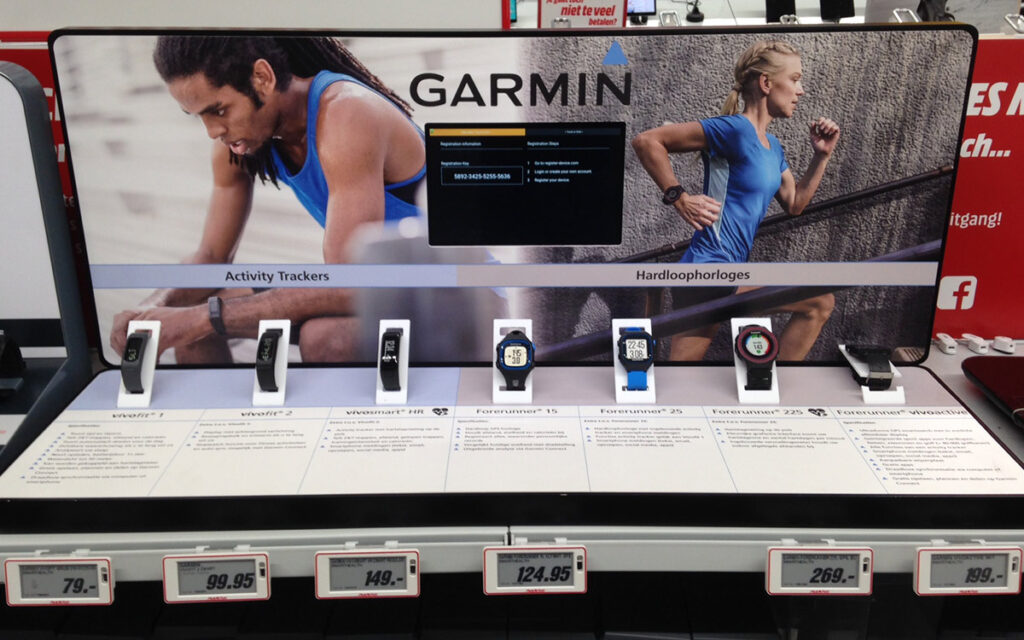
The term “POS display” is widely used but rarely clearly defined. It often refers to a display located near a shelf or at the checkout. In practice, that definition is too narrow. A POS display is not defined by where it is located, but by when it is used.
POS stands for Point of Sale: the moment when a choice is made. A POS display supports that decision-making moment—not by providing extensive information or telling a brand story, but by offering guidance just as someone is about to make a decision.
Anyone who treats a POS display as a general store display or a scaled-down trade show booth is using it for a purpose for which it was not intended.
Table of Contents
What exactly is a POS display?
A POS display is a communication tool used at or immediately around the moment of decision. That moment of decision can be a purchase, but it can also be a choice regarding a service, option, route, or next step.
The distinction lies not in format or material, but in function. A POS display operates at close range, over a short period of time, and with a clear focus. The message is always well-defined and supports an existing decision-making context.
In short: a POS display helps someone choose, not orient themselves.
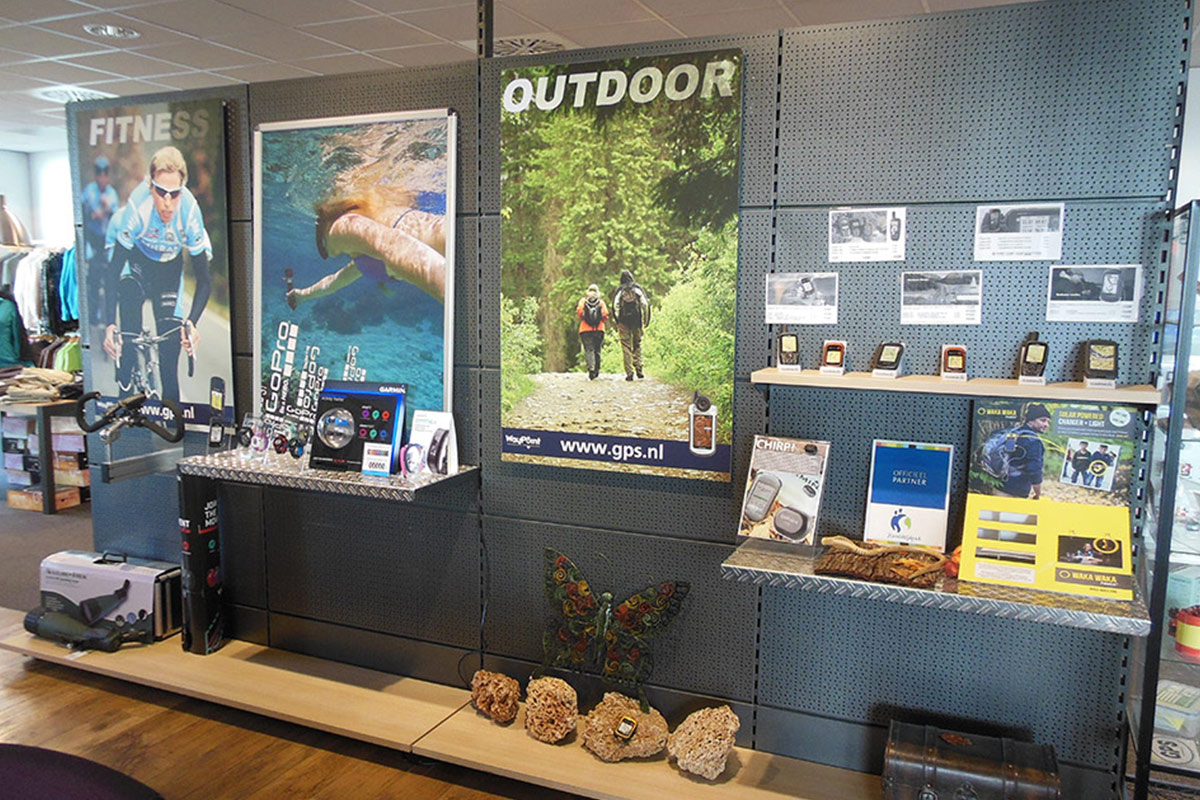
POS Display vs. In-Store Display: Difference in Function
The terms “POS display” and “in-store display” are often used interchangeably, but they fulfill different roles within the same environment.
An in-store display:
- focuses on visibility within a space
- supports wayfinding and brand perception
- is often effective from a greater distance
A POS-display:
- is close to the decision-making moment
- works at close range
- focuses on selection, confirmation, or action
A store display attracts attention.
A POS display turns that attention into a decision.
The function of a POS display in practice
A POS display operates in an environment where there are already many distractions. Attention spans are limited, and decisions are often made quickly. This means that a POS display always has a clear, specific purpose.
In practice, POS displays are primarily used to:
- to simplify a choice
- to highlight an alternative or addition
- to speed up a decision
What a POS display doesn’t do is provide detailed explanations or try to persuade customers. That’s not the right moment for that.
What is a POS display in retail, hospitality, and other industries?
Although the core function remains the same, the decision-making moment looks different in each industry. That determines how a POS display is used.
- In retail and stores, a POS display often facilitates comparison right at the shelf. The customer is already standing in front of the product and is looking for confirmation or a way to distinguish between options. Here, the display acts as an extension of the shelf.
- In the hospitality industry, the decision-making moment is time-sensitive. Guests want to choose quickly. POS displays help provide clarity and suggestions, for example at the bar, counter, or takeout area.
- In healthcare, the decision-making moment revolves around trust and clarity. POS displays support this not by creating a sense of urgency, but by offering reassurance and recognition at the right moment.
- In automotive settings, the POS display often serves a supplementary role. The primary choice is guided by advice; the display helps clarify options, accessories, or next steps.
- In education and government, the emphasis is less on sales and more on information and referral. POS displays support decision-making without commercial incentives.
- In tourism, culture, and hospitality, the decision-making moment is contextual and often fleeting. POS displays help guests make choices regarding itineraries, activities, or additional services.
- POS displays are also used at events and trade shows, but always in a supporting role. They facilitate quick action or selection in a busy environment, without overshadowing the main message.
These differences make it clear that a POS display is not a one-size-fits-all solution, but must always be tailored to the type of decision-making moment within the industry.
What information belongs on a POS display—and what doesn’t?
Because a POS display is viewed from a short distance and for a limited time, focus is crucial. Anything that doesn’t directly contribute to the decision works against it.
What does belong on a POS display:
- one clear message
- one specific choice or action
- immediate relevance to the moment
For example:
- “Choose your option”
- “Take it with you now”
What usually doesn’t belong here:
- detailed explanations
- multiple propositions at once
- general brand stories
A POS display reinforces a decision that’s already been set in motion. It rarely initiates that decision on its own.
Checklist: Is This Really a POS Moment?
Not every spot in a space is suitable for a POS display. So ask yourself these questions:
- Is the visitor already close to making a decision?
- Is the available time limited?
- Is the context recognizable and familiar?
- Does additional explanation help here, or is simplicity better?
If the answer leans more toward orientation, a POS display is usually not the right tool.
The Role of Form and Material in POS Displays
The physical form of a POS display supports its function. Because the interaction is brief, the display must be clearly organized and logically positioned. Material and construction determine how flexibly and durably the display can be used.
In environments where messages change frequently, adaptability is more important than a permanent look. In environments with static information, simplicity and a calm aesthetic can work better.
When does a POS display work well—and when doesn’t it?
A POS display works when it:
- appears at the right moment
- doesn’t try to convey more than necessary
- is logically placed within the environment
It works less effectively when:
- it’s too far from the decision-making moment
- it tries to inform rather than support
- it attempts to fulfill multiple roles at once
Conclusion
A POS display is not a one-size-fits-all display solution, but a targeted communication tool for the moment of decision. By closely examining its function, context, and industry, it becomes clear when a POS display adds value and when it does not.
Not sure whether your challenge calls for a POS display or a retail display? Start with the moment of decision, not the format.